
Loading...
Serving Green Bay, WI and surrounding areas. (920) 932-4097
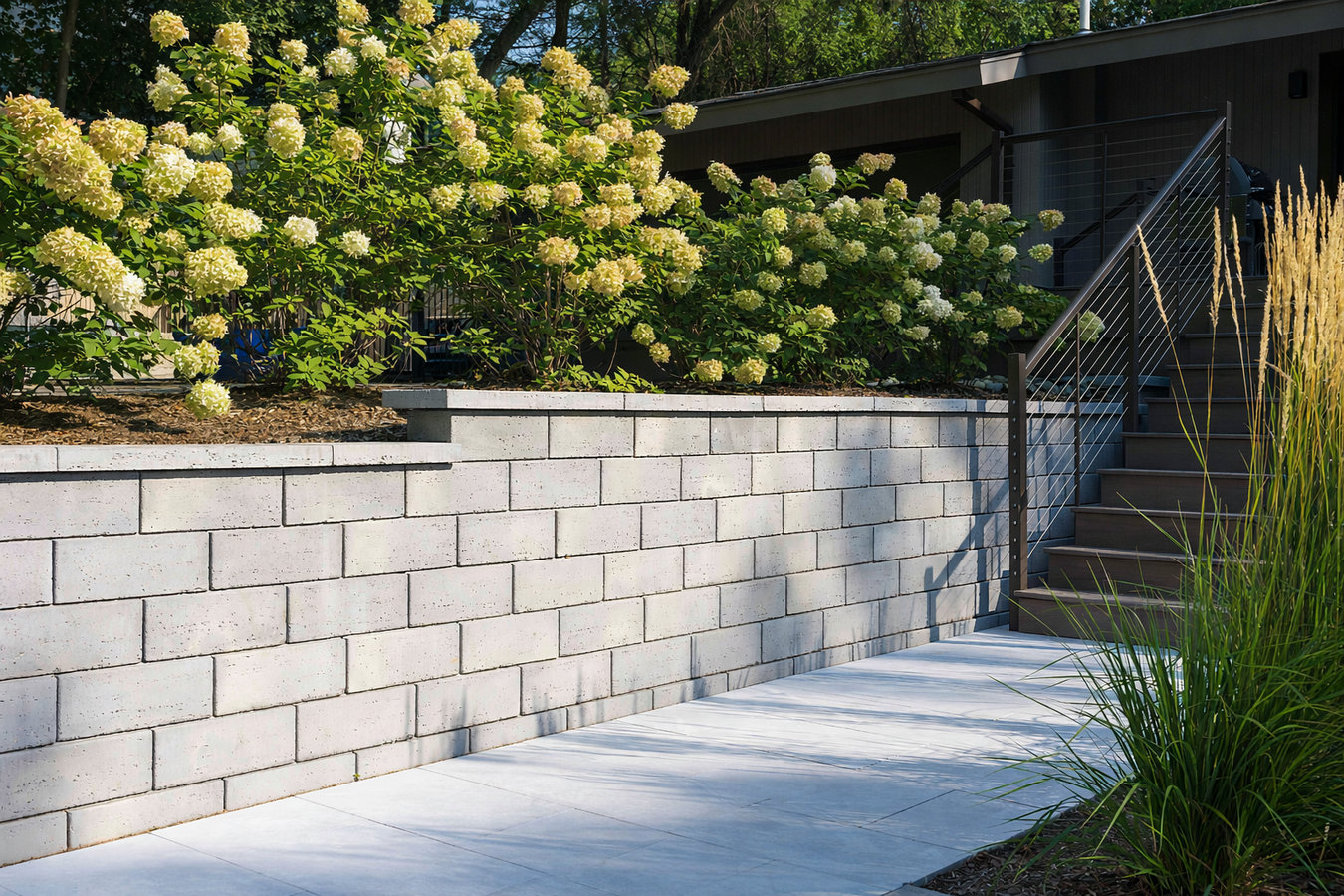
A concrete block wall that leans, cracks, or crumbles after a few winters was not built right to begin with. We build block walls in Green Bay with frost-depth footings, proper drainage, and mortar that cures correctly - so your wall looks right and stays right for decades.
Concrete block walls in Green Bay are built by stacking hollow or solid blocks made from cement, sand, and aggregate and bonding them together with mortar - most residential garden walls and short retaining walls take one to three days, while taller or longer walls requiring a poured footing can stretch to a week or more, depending on site access and drainage needs. The result serves as a garden border, a slope-holding retaining wall, a fence replacement, or a foundation perimeter. They are durable, low-maintenance, and hold up well through hard winters when built to the right depth.
In Green Bay, the footing is the part most homeowners never think about - and the part that determines whether a wall stands for 50 years or fails in five. The ground here can freeze to a depth of around 48 inches in a hard winter. A footing that does not reach below that depth will be pushed out of the ground as soil freezes and thaws each year, and no amount of good block work on top will hold a wall together if the base is moving. This is why block wall projects in Green Bay cost more than comparable work in warmer states - not as an upsell, but as a basic requirement.
If a slope or grade is part of the problem, a concrete block wall often pairs with retaining wall construction to handle both the structural hold and the finished appearance. The National Concrete Masonry Association publishes technical guidelines on footing depth, drainage, and mortar standards for block walls in freeze-thaw climates - the same standards we follow on every project.
Stand back and look at your retaining wall. If it is no longer straight - if it curves or tilts toward you - that is a sign the wall is under pressure it was not built to handle. In Green Bay, this often happens after several freeze-thaw cycles have worked on a wall with a shallow footing or poor drainage behind it. A leaning wall will not fix itself and will eventually fall.
Small hairline cracks in mortar are normal over time, but cracks running diagonally across several blocks, or gaps wide enough to slip a coin into, mean the wall has moved. Green Bay's winters are hard on masonry - water gets into small cracks, freezes, expands, and makes the crack wider every year. Spring is the right time to catch this, before another winter arrives.
If your yard does not drain well and water collects near your foundation or basement wall after rain or snowmelt, a properly built retaining or grade wall can redirect that flow. This is especially relevant for Green Bay homes on any slope, where spring snowmelt can send a significant volume of water toward the house in a short period.
If you can see daylight through a wall that should be solid, or if individual blocks have shifted so they no longer sit flush with those around them, the wall's structural integrity is compromised. This is a common finding on Green Bay properties with walls built in the 1950s through 1970s, where original mortar has simply reached the end of its life.
We build concrete block walls for retaining slopes, creating level planting areas, dividing property sections, and replacing aging fence lines that have deteriorated past repair. Every project starts with a site assessment - we look at the slope of the ground, how the area drains, what is nearby, and what kind of access is available for equipment and materials. That site visit is free, and it is the only way to quote a wall project accurately. For walls with structural or foundation applications, we coordinate closely with our foundation block wall installation work so the right wall type is matched to the load it needs to carry.
Retaining walls always include drainage planning. Water trapped behind a retaining wall is the leading cause of failure - we include gravel backfill and, where needed, a perforated drain pipe behind the wall to carry water away before pressure builds. For projects where the finished surface needs more than plain block, our retaining wall construction service covers decorative facing options and engineered designs for taller walls. The written estimate you receive will show exactly what is included in the scope before any block is ordered.
Best for homeowners with a slope that needs to be held back, or a yard that does not drain properly toward the street.
Ideal for creating level planting beds or decorative borders on a residential lot where the grade varies.
Suited to homeowners replacing a deteriorated fence or building a solid privacy or property-line wall.
Green Bay sits in a climate zone where the ground can freeze to a depth of around 48 inches in a hard winter - one of the deeper frost depths in Wisconsin. Any wall footing that does not reach below that depth will be pushed and shifted by the freeze-thaw cycle, year after year. This is not a risk you take knowingly; it is a failure that happens gradually and silently until the wall is visibly leaning or cracked. The city also has significant clay-heavy soils deposited by glacial activity - clay holds water and expands when wet, putting extra lateral pressure on retaining walls after heavy rain or spring snowmelt. A contractor who understands local soil conditions accounts for this in the drainage design and footing size; one who does not may undersize the wall for what the soil demands.
Green Bay also has a large share of homes built between the 1940s and 1970s, many of which have original block walls that are now 50 to 80 years old - built with shallower footings than current standards require and showing cracks, lean, and mortar erosion. Homeowners in Bellevue and De Pere often call us after noticing their existing block walls have slowly tilted over several winters. If your home was built before 1980, a block wall anywhere on the property is worth a close look each spring after the ground thaws.
We respond within 1 business day. Tell us where the wall is, roughly how long and tall you need it, and what it is for. Most contractors schedule a free on-site visit before quoting - block wall projects vary too much to price accurately over the phone.
A mason visits your property, looks at the slope, drainage, nearby structures, and site access. You receive a written estimate that spells out the scope, materials, and timeline - so you can compare it fairly against other bids with no surprises mid-project.
If your project requires a City of Green Bay building permit - common for retaining walls and walls near property lines - we handle the application. Once permits are in hand, the crew digs the trench and pours the footing to the required frost depth. The footing needs at least 24 hours to set before block work begins.
The crew stacks and mortars blocks course by course. For retaining walls, gravel backfill and drainage pipe go in behind the wall as the courses rise. When the wall is done, they backfill, compact the soil, clean up, and walk you through what was built. A city inspector closes out any permit before the project is officially complete.
Free written estimate. No obligation. We reply within 1 business day.
(920) 932-4097We dig to the depth required by local conditions - around 48 inches in the Green Bay area - before any block is set. A wall with a shallow footing will heave and lean within a few winters. This is the step that most shortcuts skip, and it is the step that determines whether your wall is still straight in 20 years.
Water trapped behind a retaining wall is the primary cause of failure. Every retaining wall we build includes gravel backfill and, where the site demands it, a perforated drain pipe to carry water away from the wall. We discuss drainage during the estimate - not after the blocks are stacked.
The City of Green Bay requires permits for many block wall projects, and that inspection record protects you at resale. We handle the permit application, coordinate the inspection, and make sure the project is properly closed out. You will not need to navigate that process on your own.
Many homes in this city have block walls 50 to 60 years old - built to standards that have since been updated. We give an honest evaluation of what can be repaired versus what needs to be rebuilt, from someone who understands what those older walls were built with and what they are up against today. The{" "}National Concrete Masonry Association guidelines inform the standards we apply on every project.
A well-built concrete block wall in Green Bay is not a short-term fix - it is a structure that should outlast the decade and then some. Every project we take on gets the same attention to footing depth, drainage, and mortar quality, because that is the only way to build something worth standing behind.
Structural block wall systems for foundation applications where load-bearing capacity and frost-depth footings are the priority.
Learn MoreEngineered retaining walls with proper drainage and footing depth to hold back slopes through Green Bay freeze-thaw seasons.
Learn MoreGreen Bay's masonry season is short - contractor schedules fill fast once the ground thaws, and booking now means your project starts on your timeline.